



What he’s trying to do for clients
He wants to be in the room when the decisions get made, not handed a brief after they’re made. The test he holds a strategy to isn’t whether it’s what the client asked for. It’s whether it’s what he’d do if he owned the business. Those are frequently not the same answer, and the gap between them is where the useful conversation lives.
“I’ve spent countless years sitting across from owners and leadership teams, sparring with them about their goals and about what I’d do if the business were mine.”
Then the same team drives it through. That’s not an efficiency argument. When the people who set the direction are also the people who build it, nobody’s guessing at intent six weeks later, and nobody gets to blame the plan for the execution or the execution for the plan.
Some of those conversations end with him saying you shouldn’t hire Connective. He’s helped clients build their own internal marketing teams knowing full well it meant less work coming his way. Those calls have cost real money in the short term. They also tend to come back around, because the people on the other side of them talk.
The companies he’s worked with have gone from nothing to seven and eight figures. The thing he’d point at first isn’t the growth, though. It’s that the people doing the work have genuine empathy for the owners whose businesses are on the line. That turns out to be harder to hire for than any of the technical skill.
What Rodney does here
He sets the direction for the company and shapes the strategy on the engagements that matter most. Most of the methodology the team runs on started as something he sketched out, tested on real work, and rewrote when it didn’t hold up.
So he’s in the room when the strategy gets set, and he stays close enough to change course when something isn’t working. He’s not in the room for day to day production. Senior specialists lead delivery.
That structure was learned rather than designed. Early on he measured people against the standard he holds himself to, which isn’t a reasonable standard to expect from anyone who doesn’t own the company. Letting go of that expectation is what made it possible to build a team that runs without him, and it’s why he now hires for people who can think strategically and then gets out of their way. You won’t be waiting on Rodney for day to day work. You’ll find him where the direction gets decided.
He’s also clear-eyed about the trade. A company that doesn’t depend on one person means some of the clients who originally chose him have less direct access to him than they used to. That was a deliberate decision and he doesn’t pretend it was free. What it buys is a company where the answer doesn’t have to wait on his calendar, and a client base that isn’t one and done. About 70% are still with Connective a year on.
He isn’t the only one setting direction. Maria, Connective’s Chief Creative Officer and his business partner, sets it with him.
What he’s still hands-on with
The part he won’t hand off is understanding how the work actually gets built. He knows how a site is architected, how technical SEO behaves, how systems talk to each other. That isn’t nostalgia for the job he used to have. A strategy written by someone who doesn’t understand implementation is a guess with better formatting.
He also runs Connective’s own marketing and sales. The reasoning is simple. The person setting direction should stay in contact with the market, because what buyers are worried about changes every few months, and reading about it isn’t the same as hearing it.
He’s spent the past two years working out how Connective uses AI, which in practice means deciding what it’s allowed to touch. The team uses it for research, synthesis, and first drafts. A person still owns the argument and whatever ships. Some of that work turned into something clients now pay for, which wasn’t the plan when he started.
How he got here
Rodney grew up in a small town in upstate New York and worked in the family construction business into his late twenties. When the internet arrived he was the one handed the job of building the company’s first website. He bought books, went deep, and found the thing he’d still be doing thirty years later. Before long he was building sites for the company’s subcontractors on the side, which was the first sign this could be work rather than a hobby.
He left the family business and moved to Colorado, mostly for the climbing, and found a marketing job at an agency in Boulder once he got there. He moved up quickly. Within a few years he was second in command, running branding, web design, and marketing day to day. He led the build of the agency’s own CMS, stood up its entire SEO practice from nothing, managed $3 million a month in Google Ads spend, and built organic search programs that became the main source of traffic for companies doing $50 million. The pattern was always the same. Build the system, document it, train the team, move to the next problem.
Almost all of it was self-taught, with a few good mentors along the way. That hasn’t changed.
What drew him in was never the websites, though he still likes building them. It was sitting across from an owner, working out what was actually wrong, and helping fix it. In 2010 he left the agency and started doing that under his own name, out of Houston.
Where he’s been most useful
Since starting Connective he’s sat in the decision seat at a lot of businesses. Reviewing P&Ls, building hiring plans, interviewing the hires that would make or break a team. He helped grow a finance company from a startup into a substantial enterprise over five years. He’s mentored attorneys through the transition nobody trains them for, going from practicing law to running a firm, where the hard part was never the law.
He’s also trained competing agencies on marketing and SEO, handing over frameworks that were later used against him. He’s comfortable with that. Teaching in public is how he learned most of what he knows, and the people who taught him that way, Wil Reynolds and Rand Fishkin among them, never knew his name.
Connective is the longest running version of the argument. Sixteen years, no outside investment, no acquisitions, built on the same methodology the team uses for client work.
Outside the office
Rodney needs something to obsess over. Right now that’s music, produced under two names, Trigram and Slow Motion Intro. Before that, photography. Before that, art. Before that, the climbing and mountaineering that took him to Colorado. The medium changes. The obsession doesn’t.
He’s practiced martial arts for years and it shows up in how he works. Direct feedback doesn’t bother him, and he assumes discomfort is where the useful part is. It’s the same instinct that makes him tell a client their favorite idea won’t work.
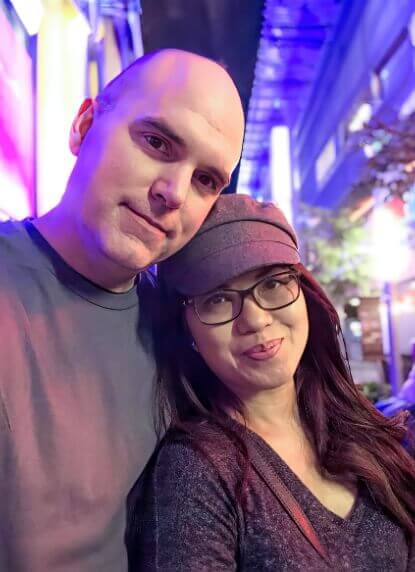
He lives in Katy, just outside Houston, with Maria and their cat, Treble.
In the press
- GoDaddy on unconventional engagement strategies
- Website Planet interview on Connective’s approach
- Smashing Magazine on website cost benchmarks
- Marketing Sherpa on effective webpage examples
- Databox on dashboard reporting tools
- Leadfeeder on ABM campaigns
- Hackernoon on influencer marketing trends
- Rasmussen University on web development careers
- Digital Journal on email marketing tools