



The challenge they faced
TDI Packsys sells food inspection systems and packaging automation equipment to food manufacturers across North America. Metal detectors, X-ray inspection systems, checkweighers, vertical form-fill-seal systems, robotic packing systems. Complex equipment solving critical problems for companies that can’t afford contamination issues or inefficient packaging lines.
The challenge wasn’t their product or service quality. It was visibility and credibility.
What was broken:
- Product information was stale, with best-selling equipment not even listed
- Navigation organized by model numbers that meant nothing to prospects
- Zero SEO foundation, invisible in search results
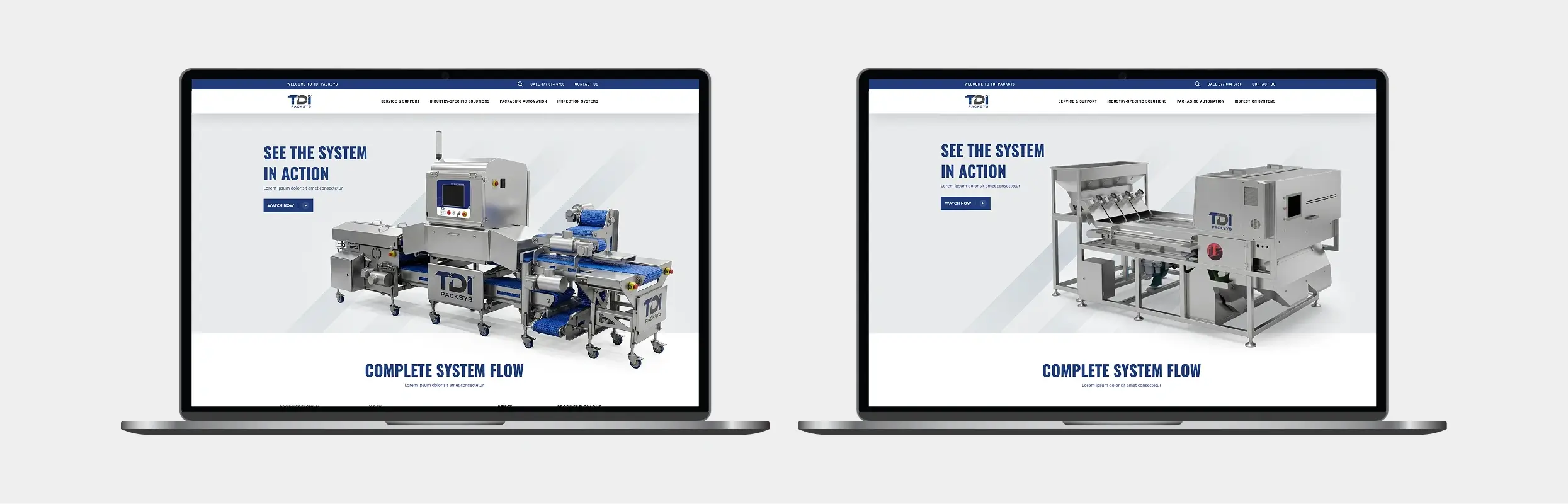
- Site design undersold their actual size and capabilities
- Previous agency was slow to respond and expensive for basic updates
- No clear paths to conversion for different buyer types
- Even when sales had a strong conversation, the site wasn’t helping close it
For a company where over 90% of sales originate through website-driven leads, this was existential.
They compete against industry giants with massive marketing budgets and decades of brand recognition. When prospects searched for food inspection equipment, TDI wasn’t showing up. When prospects did find them, the website didn’t communicate why TDI was worth considering alongside the established names.
As their marketing lead put it: “I want us to look well established because a lot of customers are meeting us for the first time. And I want it to look like, ‘Why haven’t we seen these guys before? They clearly know what they’re doing.'”
They needed a website that could carry the sales weight. And a partner who understood that web design was just the beginning.
How we approached it
What discovery revealed
Before we touched wireframes or design concepts, we needed to understand the competitive landscape and how TDI’s buyers actually think.
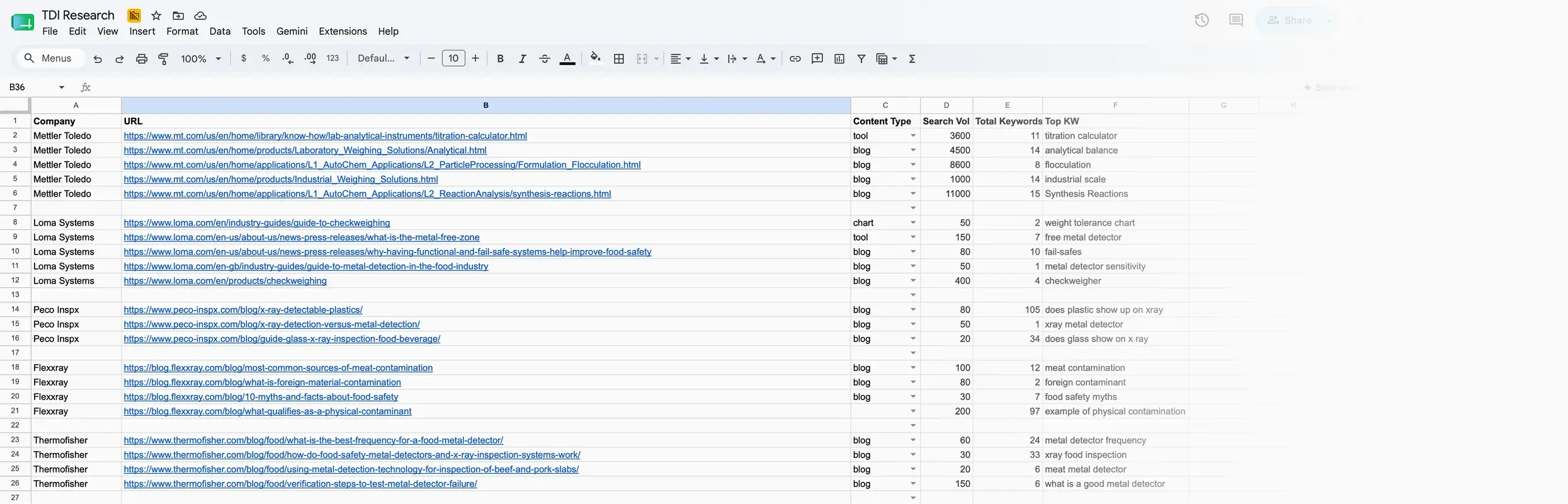
We mapped the complete architecture, user journeys, and homepage structures of every major competitor. Not to copy them, but to find where we could differentiate. We ran intensive interviews with the TDI team to understand their actual buyers, their sales process, which products drive the most margin, and which applications trigger the most quote requests.
Three insights shaped everything that followed:
TDI serves two distinct buyer types with different needs. Technical decision-makers need specs, documentation, and compliance information. They comparison shop extensively. Operations leaders and business owners care about outcomes: uptime, ROI, support quality. They want fast answers to “can you solve my problem.”
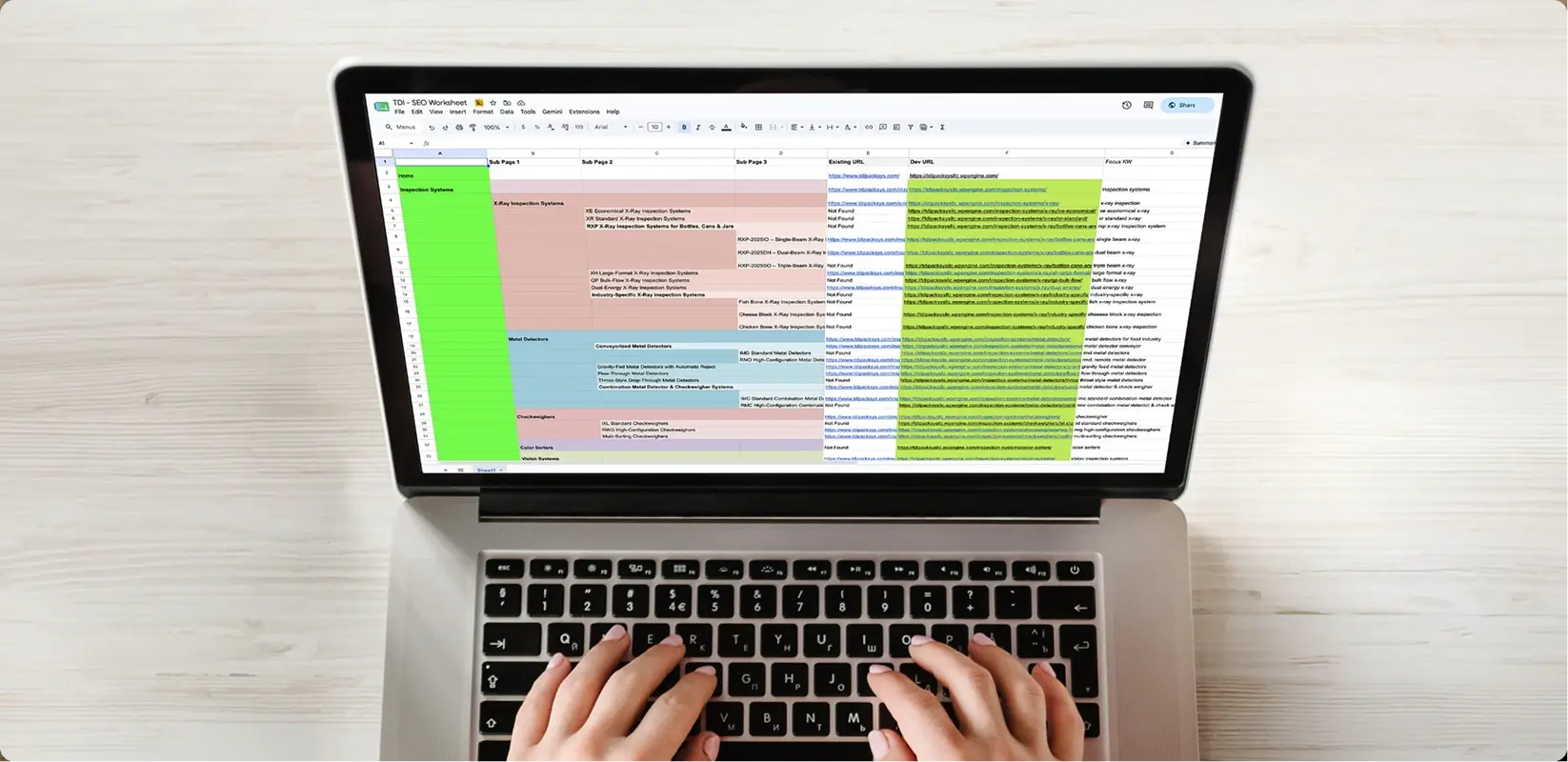
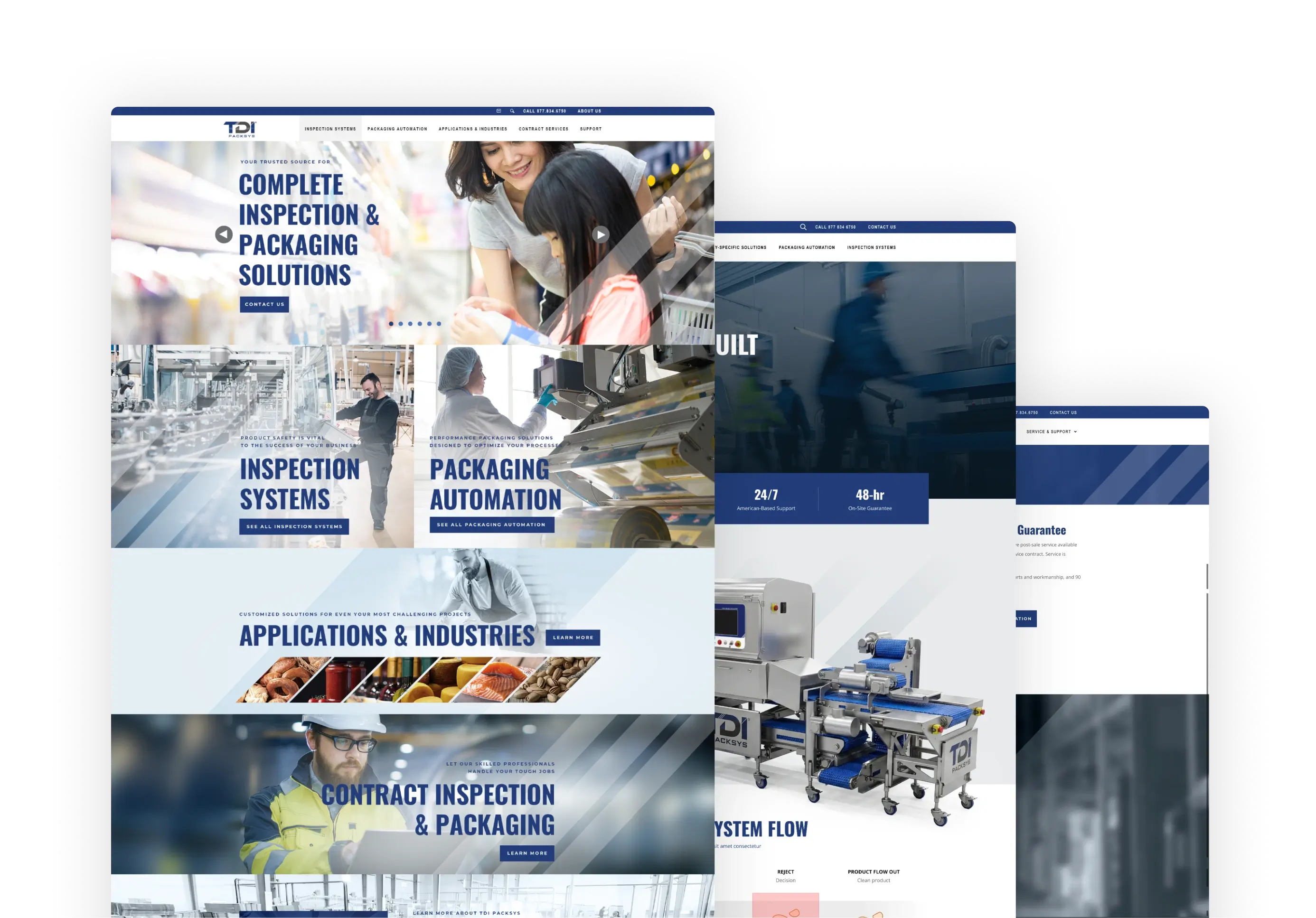
Product organization needed to match how buyers think, not how TDI organizes internally. Model numbers mean nothing to someone searching for “metal detector for cheese processing.” Application-focused navigation would serve both buyer types better.
Credibility signals matter enormously when you’re competing against giants. The site needed to communicate established expertise and depth without trying to look bigger than they are. Authenticity beats imitation.
How services integrated
Everyone worked from the same research. The designer understood buyer personas. The developer knew why page structure mattered for SEO. The content strategist had context for why technical specifications needed prominence alongside application-focused messaging. Nobody was guessing.
Because the same research drove design, dev, and content, we avoided the typical rework loops. Competitive intelligence informed site architecture. Keyword research shaped navigation categories and page structure. SEO strategy was baked into the wireframes, not retrofitted after launch. Content strategy emerged from understanding what questions each buyer type asks at each stage.
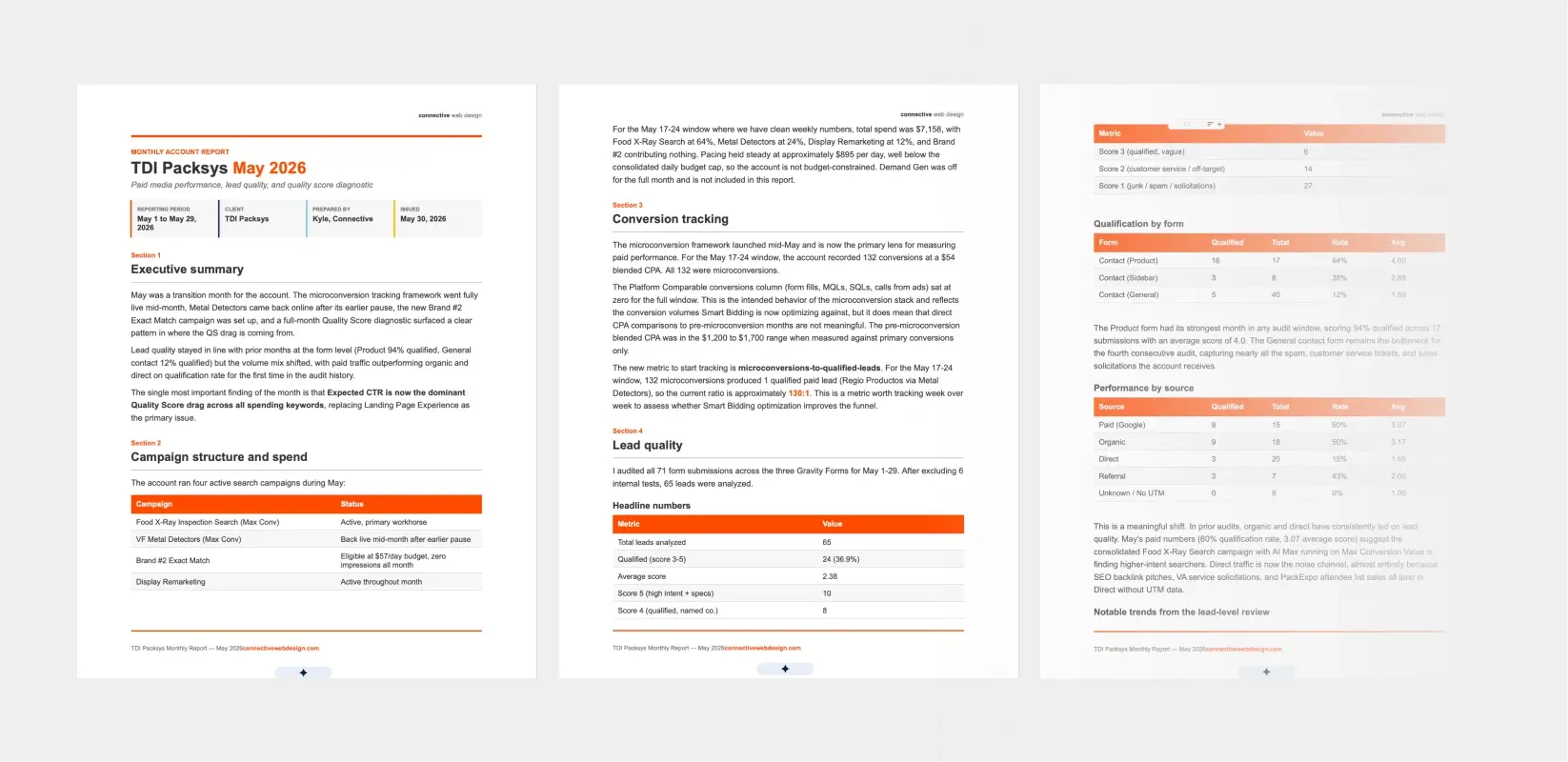
After launch, that same shared understanding powered ongoing marketing. SEO, content marketing, and PPC campaigns all built on the same strategic foundation instead of starting fresh with each initiative.